Analog
Why Habit Apps Fail (and Paper Doesn’t)
P
The Panda Habits Team · Jun 2026 · 7 minHabit apps fail because they live on the same device engineered to distract you, every reminder competes with feeds, badges, and notifications for the same dopamine. Paper removes that competition: one page, one habit, one pen. Writing by hand also encodes the habit more deeply than tapping a checkbox.
You’ve been here before. You download a shiny new habit tracker, spend twenty minutes setting up streaks and reminders, feel a jolt of motivation, and three weeks later the app is buried on your last home screen next to the others you abandoned.
It’s not a discipline problem. It’s a design problem.
Habit apps live on your phone, which means they compete with every other app for the same dopamine. The notification that reminds you to meditate arrives in the same channel as the one pulling you into an endless feed. Your brain can’t tell the difference, it just learns that unlocking your phone leads to something, and follows the path of least resistance.
The tool meant to build your focus is running on the device engineered to break it.
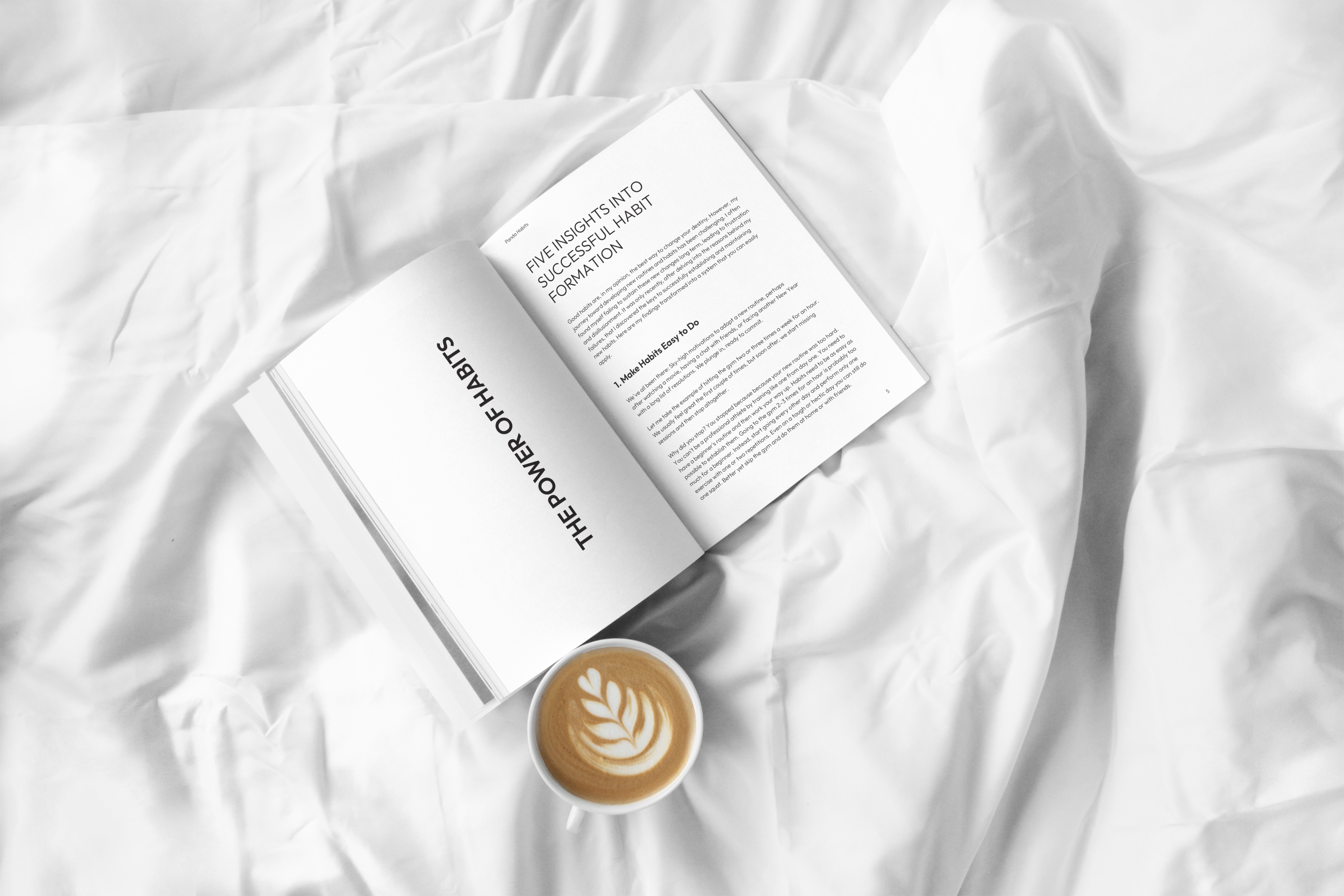
When your habit lives in a journal on your nightstand, there’s nothing to scroll to, no badge to clear, no algorithm deciding what you see next. There’s one page, one habit, one pen. The friction that apps try to eliminate is exactly what makes paper stick: the tiny, deliberate act of writing something down signals to your brain that it matters. That’s the whole idea behind the Panda Habits Journal.
Research on the “generation effect” shows we remember things far better when we produce them by hand rather than select them from a menu. Ticking a digital checkbox is selection. Writing “walked 20 minutes, felt good” is generation.
Most apps encourage you to track everything at once, water, steps, sleep, gratitude, reading. Paper naturally resists that. There’s only so much room on a page, so you’re forced to choose what actually matters this season. That constraint is the feature. Focus on one keystone habit and the others tend to follow.
A phone can still help, as a backup, not the main stage. The optional companion app mirrors your streak and sends one gentle reminder a day, then gets out of the way. Paper leads; the phone follows. If you suspect your phone is actively fuelling avoidance, take the free procrastination test to see where you stand.
Pick a single habit, give yourself a two-minute daily ritual, and keep it somewhere you’ll see it without a screen. That’s the entire Panda Habits method, and it’s why it works when the apps didn’t.
The Panda Habits Journal turns everything above into a two-minute daily flow.
Get the Journal · €25